
Awkward bedroom layouts can make storage feel like a compromise. A sloped ceiling, deep alcove, chimney breast, low wall or narrow corner can leave you with gaps that standard furniture never quite uses properly.
Fitted bedroom design takes a different approach. Instead of working around the room, it works with the shape of it, turning difficult areas into useful storage while keeping the finished space calm, tidy and easy to live with.
Start with the room, not the furniture
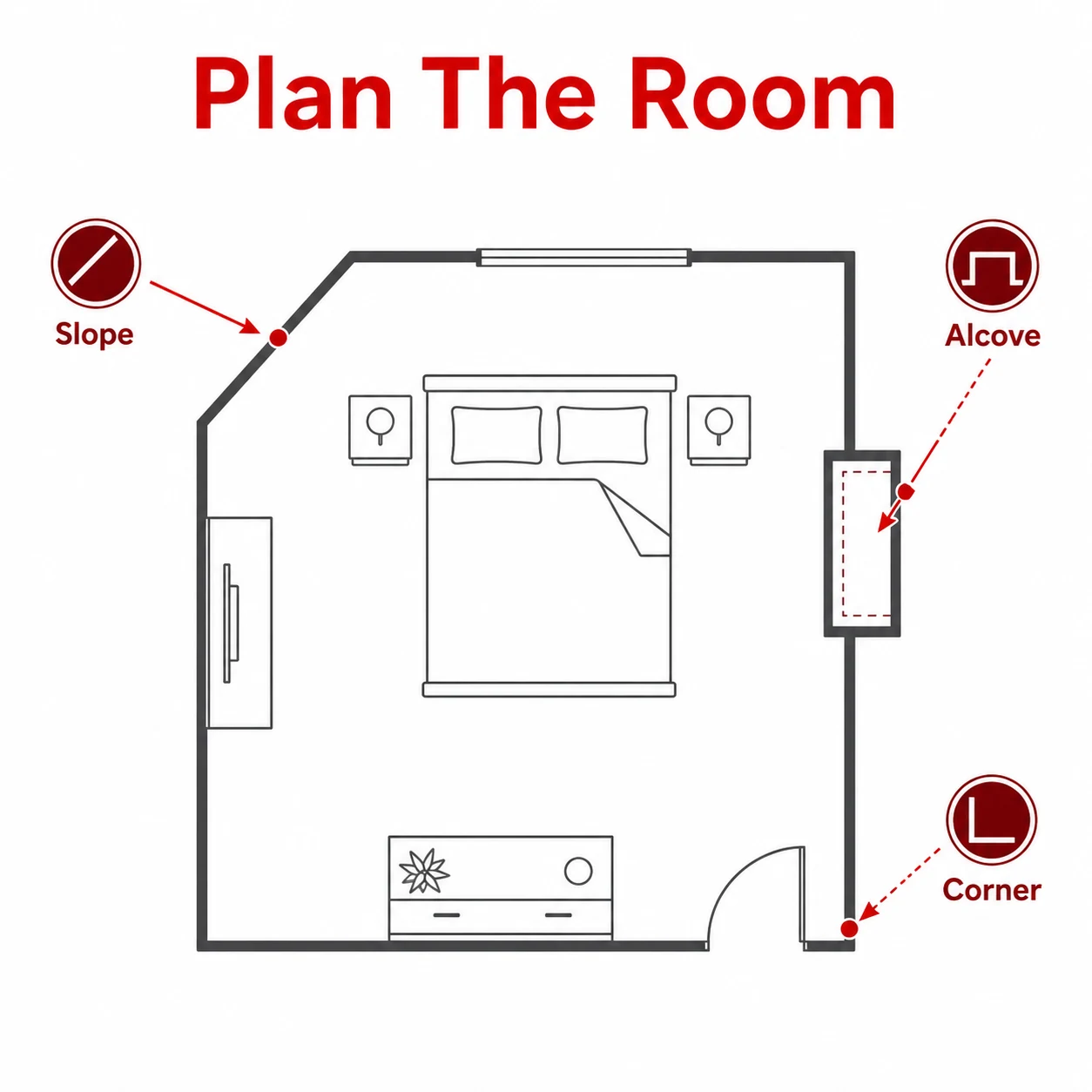
The best fitted bedroom storage begins with the room itself. Before choosing door styles, colours or handles, it helps to look carefully at how the space behaves. Where does the ceiling drop? Which walls are broken up by alcoves? Where do doors swing? Is there enough walking space around the bed? These details decide what type of storage will feel natural.
Freestanding wardrobes often leave unused strips above, beside and behind the furniture. In an awkward room, those gaps become more noticeable because the furniture has to sit where it can, rather than where it would work best. Fitted wardrobes, drawers and shelving can be planned to follow the available wall space more closely, so the room feels considered rather than patched together.
A useful starting point is to list what actually needs to be stored. Hanging clothes, folded clothes, shoes, bedding, bags, accessories and seasonal items all need different depths and heights. A good fitted design does not simply create as many cupboards as possible. It creates the right mix of hanging, drawer and shelf space, so everything has a place and the room avoids visible clutter.
If you are planning a full redesign, Redscar Kitchens offers fitted bedroom design and installation for spaces where storage needs to be both practical and neatly finished.
Use sloped ceilings for graduated storage
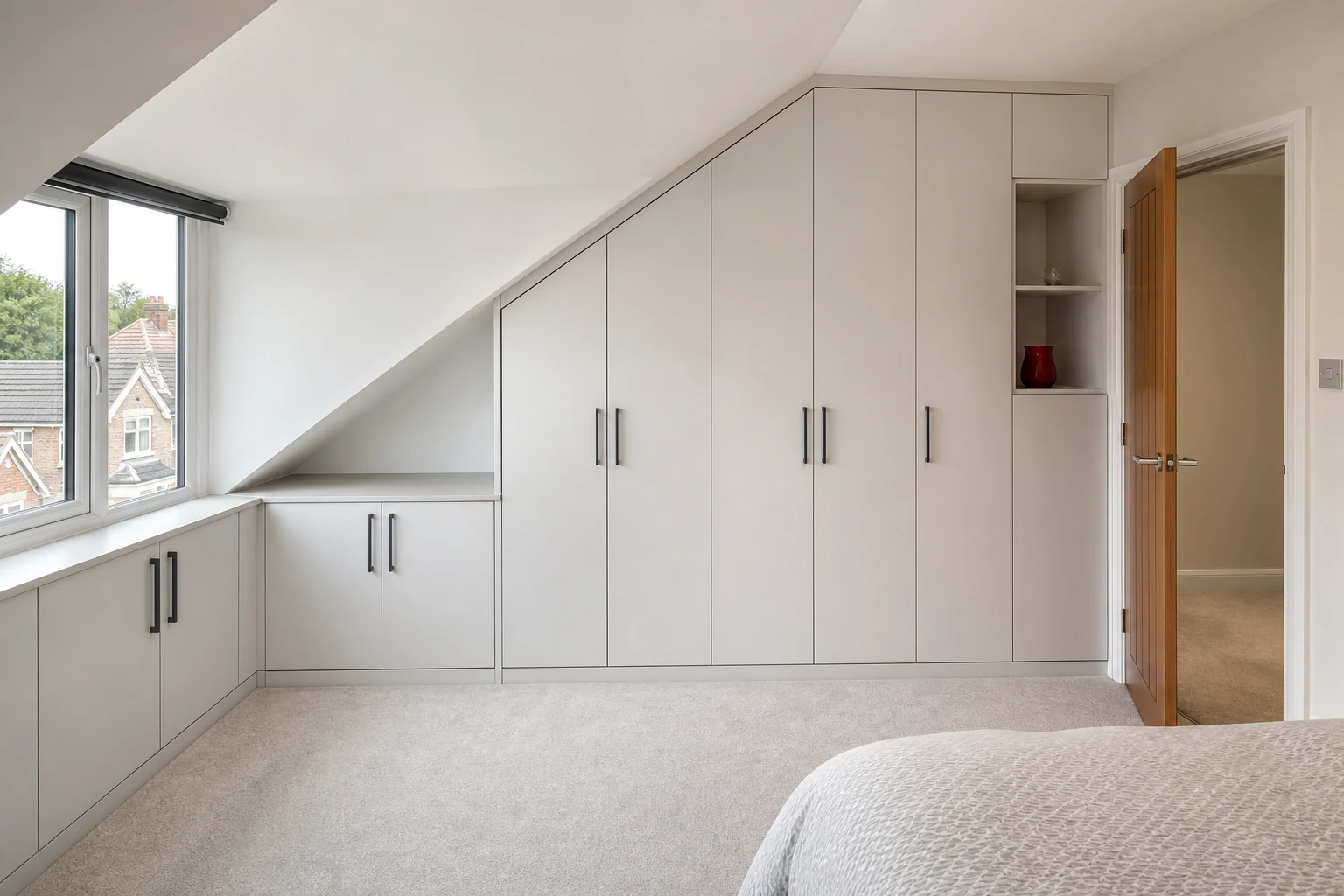
Sloped ceilings are one of the most common reasons people consider fitted bedroom furniture. They can make a room feel interesting, but they also create areas where standard wardrobes are too tall, too deep or simply the wrong shape.
The key is to avoid treating the lowest part of the slope as wasted space. It may not suit full height hanging, but it can be ideal for drawers, shoe storage, bedding compartments, open shelves or low cupboards. Taller sections can then be reserved for hanging rails, longer garments and everyday items that need easier access.
A graduated layout works particularly well. This means storage rises with the ceiling line, rather than forcing one boxy shape into the room. Low cabinetry can sit beneath the tightest section, medium height cupboards can step up through the room, and full height wardrobes can be placed where the ceiling allows. The result feels more balanced and uses the available volume intelligently.
Internal layout matters just as much as the outer shape. Pull out rails, short hanging sections, adjustable shelves and drawers can make the lower parts of a sloped area much easier to use. Without this planning, low storage can become a place where things disappear. With the right design, it becomes some of the most useful storage in the room.
Turn alcoves into clean built in zones
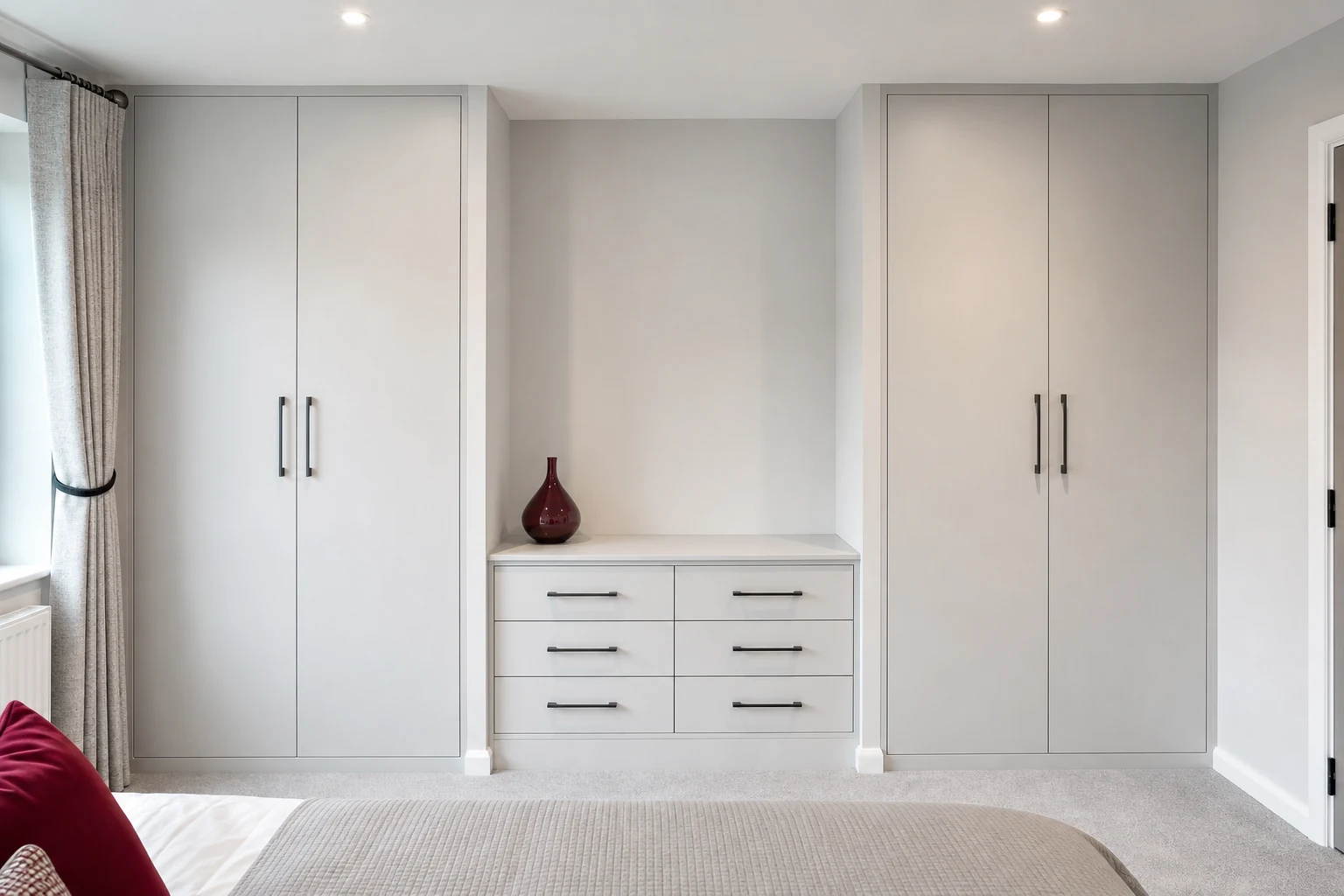
Alcoves can be tricky because they often look useful at first glance, but they are rarely the perfect size for standard furniture. A wardrobe may be too wide, a chest of drawers may sit proud of the wall, and shelving alone may not hide enough everyday items.
Fitted storage can make alcoves feel intentional. Matching wardrobes on either side of a chimney breast can create a balanced wall, while drawers below and cupboards above can give each recess a clear purpose. In some rooms, one alcove may suit hanging space and the other may work better as folded storage, a dressing area or a combination of shelves and closed cabinets.
The main design choice is how much should be visible. Open shelving can be useful for items that are tidy by nature, but too much open storage can quickly make a bedroom feel busy. Closed doors are often better for clothes, bedding and practical items because they preserve a calm finish. A small amount of open display can work well, provided it is planned rather than added as an afterthought.
Door alignment also makes a big difference. When alcove storage is designed to line up with nearby wardrobes, drawers or wall features, the whole room feels calmer. Even awkward recesses can become part of a clean built in layout instead of looking like leftover spaces.
Make tight corners easier to use
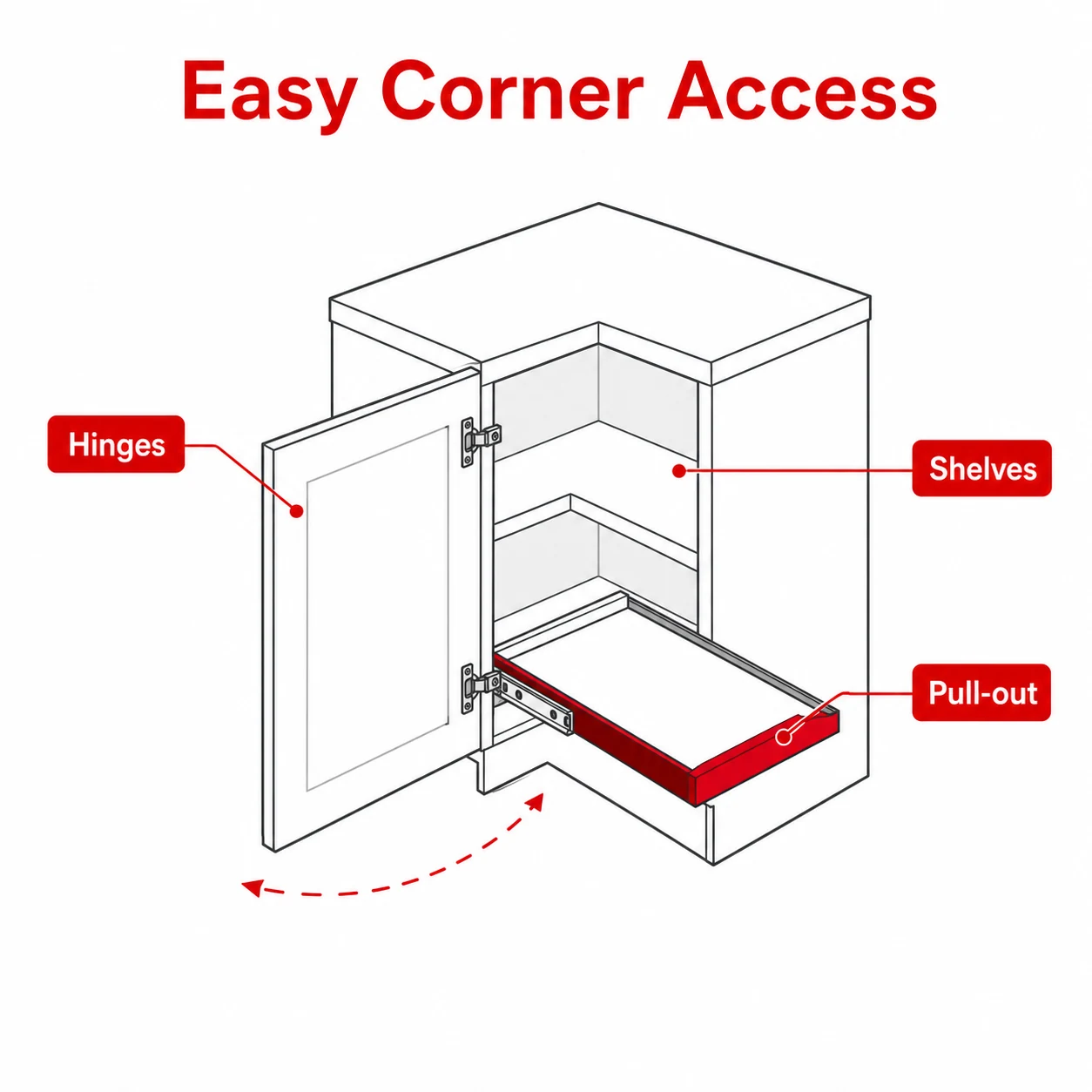
Corners are often underused in bedrooms because they are difficult to access with ordinary furniture. A wardrobe door may clash with a bedside table, drawers may not open fully, or two pieces of furniture may meet in a way that creates a dead corner.
Fitted bedroom design can solve this by deciding what the corner should do before anything is built. In some rooms, a corner is best used for shelving or drawers. In others, it can become a deeper hanging area for less frequently used clothing. Where access is tighter, sliding doors or carefully planned hinged doors can help keep the layout practical.
One mistake is trying to force every corner into maximum storage. More storage is only helpful if it can be used comfortably. A slightly simpler corner design, with clear access and sensible internal fittings, can be more valuable than a complicated cupboard that is hard to reach.
The bed position should be considered at the same time. Storage that looks good on a plan can feel cramped if it narrows the route around the bed. A fitted layout should protect the natural walking paths in the room, so drawers open properly, doors do not fight for space and everyday use feels easy.
Choose internal fittings that reduce clutter
The outside of fitted bedroom furniture gives the room its clean appearance, but the inside decides how well it works day to day. A beautiful run of wardrobes can still become frustrating if the internal layout does not match the way you use the room.
Double hanging rails can be useful where most clothing is shorter. Full height hanging is better for dresses, coats or longer garments. Drawers are ideal for smaller folded items because they stop piles from becoming untidy. Shelves work well for jumpers, bags and storage boxes, but they should be spaced sensibly so they do not become deep stacks that are hard to manage.
Accessories can also help awkward rooms feel more organised. Shoe racks, pull out trays, tie and belt storage, internal dividers and lift up compartments can all make storage easier to use. The goal is not to add every possible feature. It is to choose the fittings that remove friction from daily routines.
Lighting can be worth considering too. Internal wardrobe lighting or well placed room lighting can make deep cupboards and corners easier to see into. Good visibility helps storage stay tidy because items are easier to find and return to the right place.
Keep the finished bedroom calm and uncluttered
Awkward layouts can sometimes tempt people into adding several separate pieces of furniture to solve different problems. A wardrobe here, a drawer unit there, a shelf in another corner. Each item may be useful, but together they can make the room feel crowded.
Fitted furniture helps because it can bring those storage needs into one cleaner scheme. Consistent door lines, considered proportions and a planned mix of internal storage can make the room feel more spacious, even when the actual footprint has not changed. The eye reads the furniture as part of the room rather than as a collection of separate items.
Finishes should support that calm feeling. Simple doors, neat handles or handleless options, and well planned cabinetry can help awkward spaces look settled. Mirrored doors can brighten some rooms and reduce the need for a separate mirror, while painted or textured finishes can create a softer fitted look. The right choice depends on the room, the amount of light and the style you want to live with every day.
It can also help to see storage ideas in a display setting before making final decisions. The same thinking behind showroom displays that help people compare layouts and finishes can be useful when judging bedroom storage, because seeing proportions in person often makes choices clearer.
- Awkward areas such as sloped ceilings, alcoves and corners can often become valuable storage with the right fitted design.
- Plan the internal layout around real belongings, not just the outside appearance of the wardrobes.
- Closed storage usually keeps a bedroom calmer, while small open areas can work when they have a clear purpose.
- Good fitted bedroom design protects walking space, access and everyday comfort as well as increasing storage.
- A tidy installation finish helps the furniture feel like part of the room rather than extra furniture added later.
Frequently asked questions
Are fitted wardrobes worth it for a small or awkward bedroom?
Yes, they can be especially useful in rooms where standard furniture wastes space. A fitted design can use wall height, alcoves, corners and low areas more effectively while keeping the room looking organised.
What can be stored under a sloped ceiling?
Lower sections can work well for drawers, shoes, bedding, folded clothes and seasonal items. Taller parts of the same wall can then be used for hanging space and items you reach for more often.
Should alcove storage be open or closed?
Closed storage is usually better for keeping a bedroom calm and tidy, especially for clothes and bedding. Open shelving can work well in small amounts for items that stay neat and are used deliberately as part of the room design.
How do bedroom fitters deal with uneven walls or awkward corners?
Experienced bedroom fitters measure the space carefully and plan cabinetry to suit the room. This can include adjusted depths, shaped panels, careful door placement and internal fittings that make difficult areas easier to use.
Plan a bedroom that uses every awkward space well
If your bedroom layout makes storage difficult, a fitted design can help you create a calmer, more practical room with a tidy finish. Speak to Redscar Kitchens about bedroom design ideas that work with the shape of your space.