
Cabinet finishes shape how a modern kitchen looks, feels and works every day. They affect light, cleaning, storage choices, handle style and how confidently the room sits with your worktops and flooring.
The best choice is rarely about chasing one trend. It is about finding a finish that suits your home, your routine and the level of polish you want from a fitted kitchen.
Start with how the kitchen will be used
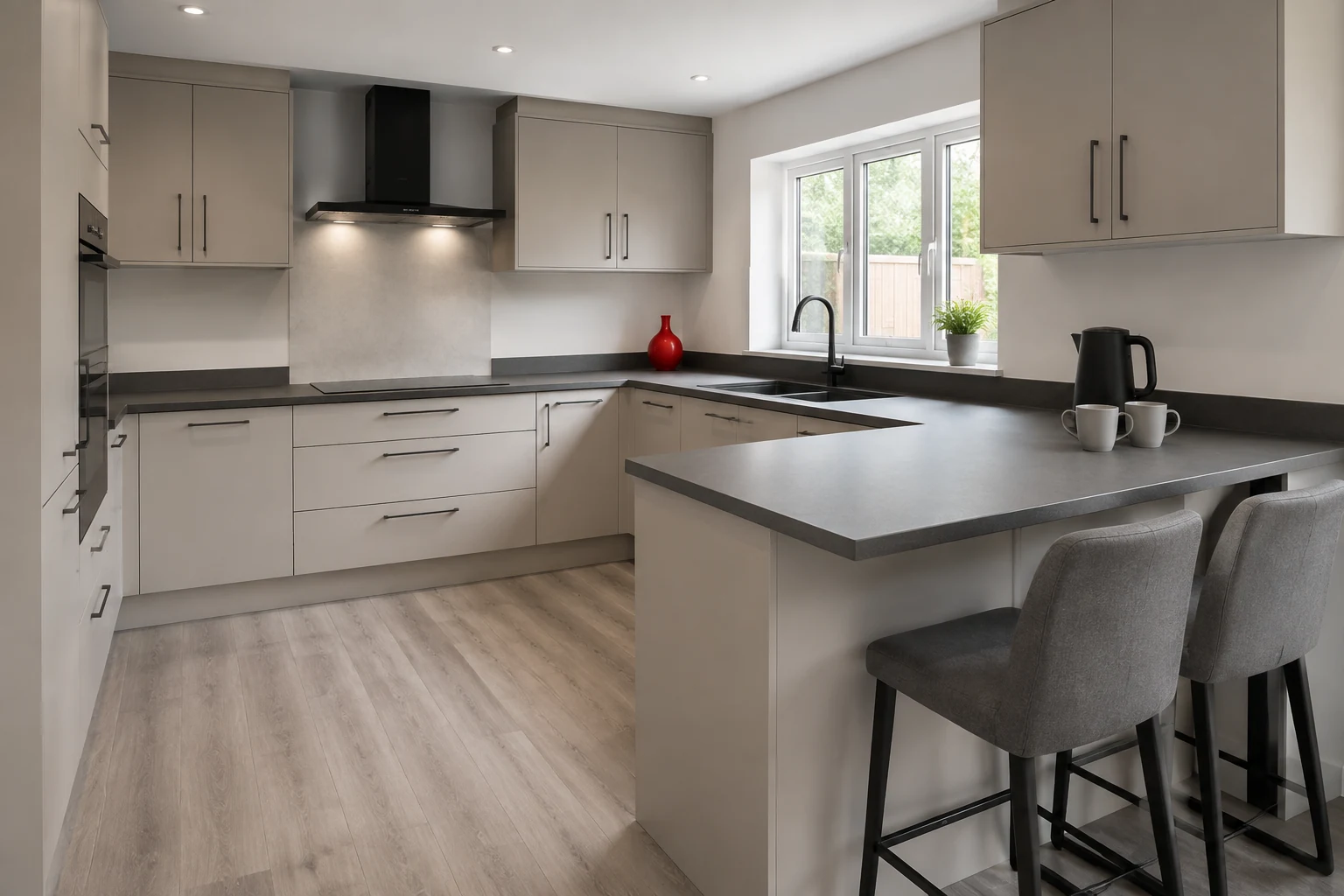
Before choosing between matt, gloss, textured, painted or handleless cabinets, think about daily use. A busy family kitchen needs finishes that feel practical around cooking, cleaning and storage. A kitchen used mainly for entertaining may give more weight to depth of colour, lighting effects and a more tailored look.
Touch points matter. Lower cupboards, bin units, pan drawers and fridge surrounds are handled constantly, so the finish needs to be comfortable to clean and durable enough for repeated use. Tall banks of storage and wall cabinets are seen more than touched, which gives you more freedom to introduce richer colours or statement finishes.
It also helps to look at the whole kitchen as one design, not as separate samples. Cabinet colour, worktop texture, splashback choice, flooring and lighting all change how a finish appears. A warm neutral can look calm beside a pale worktop, but flat beside similar flooring. A deep colour can feel refined with the right contrast, but heavy if every surface competes for attention.
If you are planning a complete room, Redscar Kitchens has a dedicated modern fitted kitchens service where cabinet finishes can be considered alongside layout, installation and the final look of the space.
Matt cabinets for a calm modern look
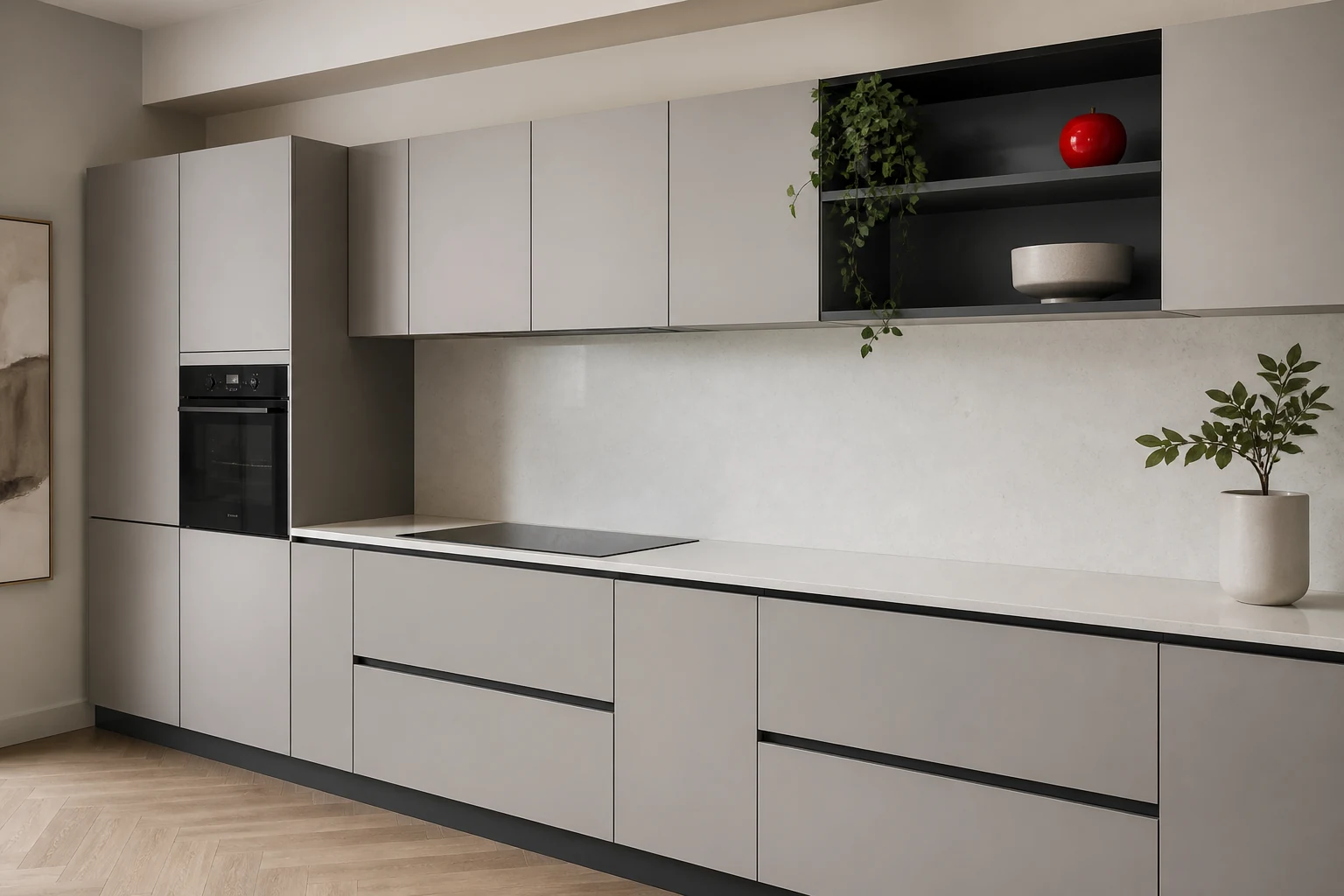
Matt finishes are popular in modern kitchen design because they create a softer, more controlled appearance. They do not bounce light around in the same way as gloss, so they can make a kitchen feel composed and architectural. This suits handleless doors, simple slab fronts, framed details and designs where the cabinetry should feel refined rather than showy.
A good matt finish can work beautifully in pale neutrals, soft greys, deep green, navy, charcoal and warmer earthy tones. It is especially effective when paired with crisp worktops and neat installation details because the overall look relies on clean lines rather than shine.
The practical question is how the matt surface deals with marks. Some very flat finishes can show fingerprints, especially in darker colours and on frequently used doors. Many modern matt doors are designed to be easier to maintain, but it is still worth testing a sample with natural hand contact rather than judging it only by appearance.
Matt is a strong choice if you want a kitchen that feels current but not overly glossy. It tends to age gracefully because the effect is understated. For a luxury kitchen design, matt cabinetry often works best when the surrounding details are precise, including even gaps, well planned lighting, aligned handles or push to open hardware and a tidy junction between cabinets and worktops.
Gloss cabinets and reflected light
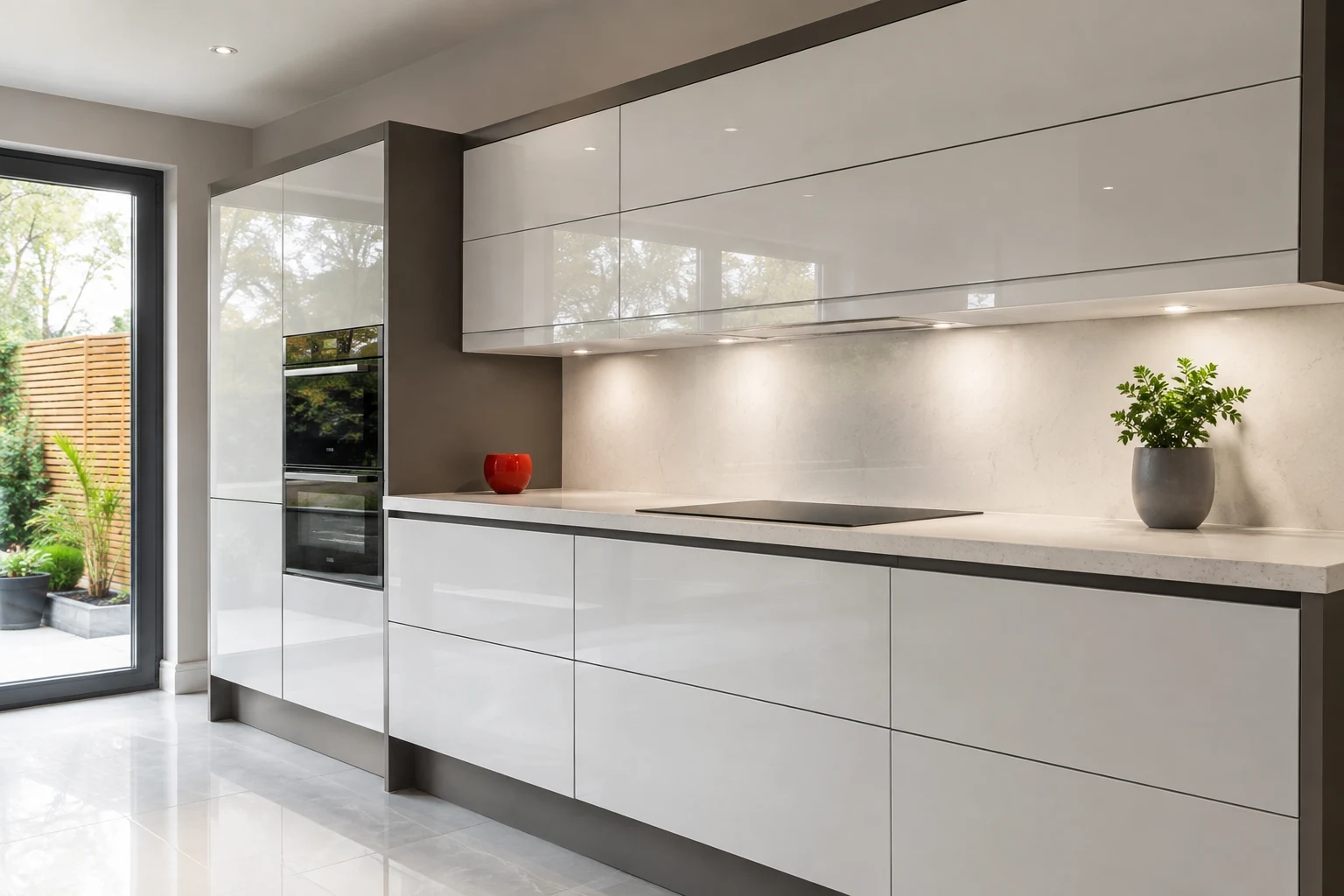
Gloss cabinets create a brighter, sharper feel. The reflective surface can help a kitchen feel more open, particularly when used on wall units, tall doors or lighter colour schemes. Gloss can also suit very sleek designs where polished surfaces and clean lines are part of the character of the room.
The main design consideration is balance. Too much shine across cabinets, worktops and splashbacks can feel busy, especially when there are lots of appliances, small items and changing reflections in the room. A measured use of gloss can be more successful, such as pairing gloss cabinetry with a quieter worktop, or using it in a simple colour where the reflection becomes part of the lightness of the room.
Gloss also makes installation accuracy more visible. Reflections can draw attention to uneven lines, poorly aligned doors or inconsistent gaps. That does not mean gloss should be avoided, only that it benefits from careful planning and a quality fit. The final finish has a major role in making glossy cabinets look intentional and premium.
If you are comparing showroom displays, look at gloss from different angles and in different lighting. Stand near the doorway, beside the island if there is one and close to the main working run. The finish may feel different depending on where natural light enters and how much of the room it reflects.
Handleless, integrated handles and classic hardware
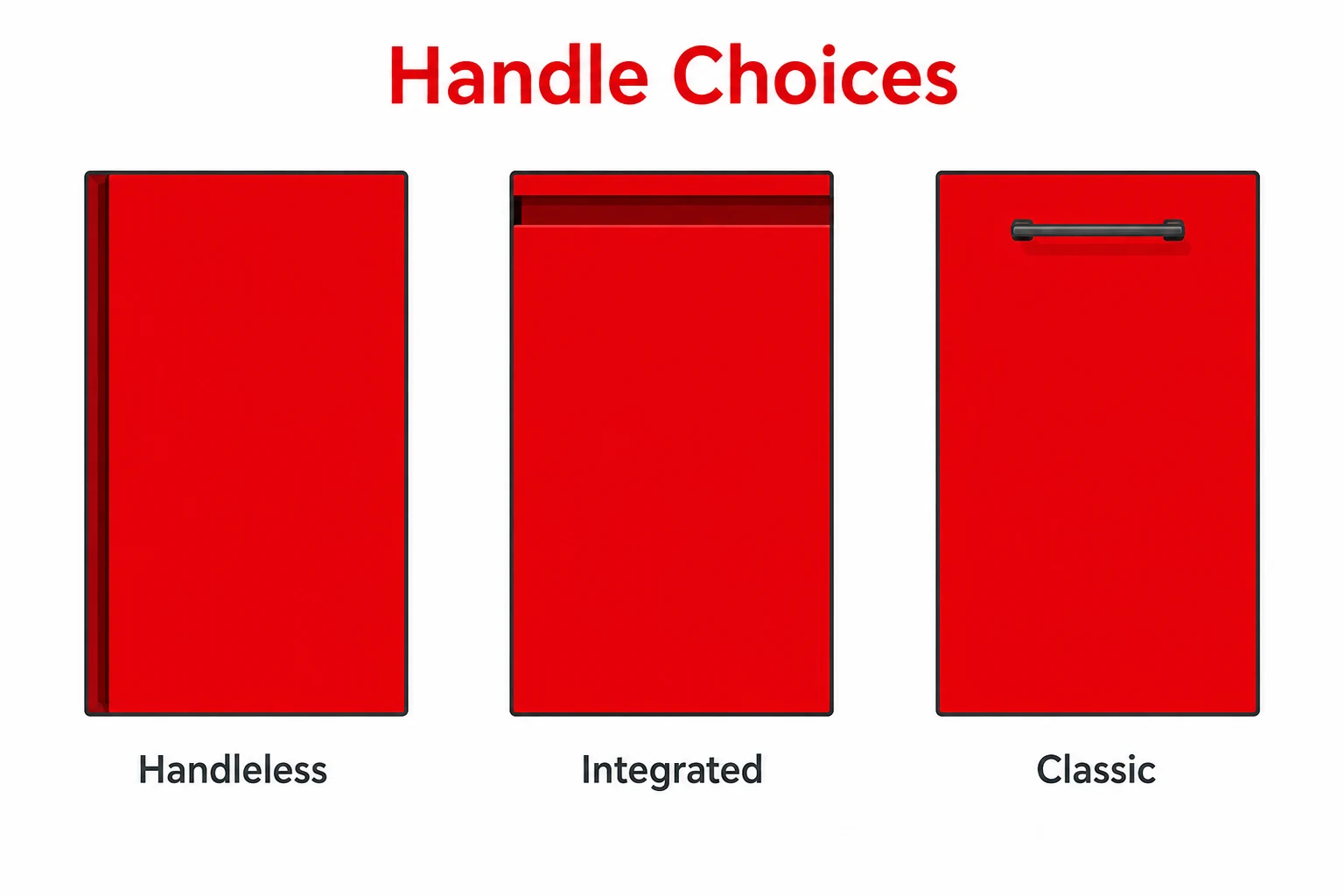
The way a cabinet opens changes the feel of the finish. Handleless doors give a modern kitchen a smooth, uninterrupted look. They work particularly well with matt finishes, linear layouts, tall storage banks and restrained colour palettes. Because there is less hardware on show, the cabinet finish itself becomes more important.
True handleless designs often use recessed rails, while other designs use discreet integrated pulls or push to open mechanisms. Each option has a different feel in daily use. Recessed rails can emphasise horizontal lines. Integrated handles can be easier to grip while keeping the front visually simple. Push to open doors can look very clean, although they need to suit the way you use the kitchen.
Traditional handles still have a place in modern kitchens. Slim bar handles, dark metal pulls, brushed finishes or simple knobs can add contrast and definition. They can also protect the door surface from repeated contact, which may be useful on darker matt cabinets or units used heavily throughout the day.
When choosing hardware, consider more than colour. Look at projection, grip, cleaning, comfort and whether the handle works across drawers, larder units and wall cabinets. A handle that looks elegant on one door can feel awkward when repeated across a full kitchen. This is where seeing real displays can help, and the guide to using kitchen showroom displays to choose the right design explains why physical examples are so useful.
Using colour contrast without overdoing it
Colour contrast is one of the clearest ways to make a modern kitchen feel designed rather than simply fitted. The contrast might be between upper and lower cabinets, a feature island and surrounding runs, dark tall storage with lighter base units, or a cabinet colour that frames a pale worktop.
The key is to decide which part of the kitchen should lead. If the cabinets are the feature, keep worktops, splashbacks and flooring quieter. If the worktop has strong movement or pattern, simpler cabinet finishes often let it breathe. For open plan spaces, the cabinet colour should also sit comfortably with nearby furniture and wall colours.
Two tone kitchens work best when there is a clear reason for the split. Darker base units can ground the room while lighter wall units keep it open. A contrasting island can create a natural centre point. Tall cabinets in a deeper shade can make storage feel built in and deliberate.
Accent colours should be used with care. A bold shade can look confident on selected cabinetry, but it becomes easier to live with when balanced by neutral surfaces, good lighting and simple detailing. If you like stronger colours, try viewing them on a larger sample or a full door, as small swatches can understate their impact.
For wider inspiration, the Redscar Kitchens guide to current kitchen design trends can help you separate lasting ideas from details that may date more quickly.
Think about worktops, lighting and the final fit
Cabinet finishes should never be chosen in isolation from worktops. A smooth matt cabinet can look elegant beside a stone effect surface, a pale quartz style worktop or a timber tone. Gloss may work better when the worktop has a calmer finish. Textured doors can add warmth, but they need enough contrast against flooring and worktops so the room does not feel visually crowded.
Cleaning is another practical part of the decision. Smooth slab doors are generally simple to wipe. Detailed door profiles can add character, but they have more edges and grooves. Darker finishes can show dust or marks more readily in certain lighting, while very pale finishes may show splashes around cooking and sink areas. None of these points should rule out a finish you love, but they should inform where it is used.
Lighting changes everything. Cabinet finishes can appear warmer, cooler, darker or shinier depending on ceiling lights, under cabinet lighting and daylight. A finish that looks subtle in a showroom corner may feel stronger across several metres of cabinetry. Good design planning accounts for this before installation begins.
The final quality of the fit is what makes the finish look complete. Door alignment, plinth lines, end panels, filler pieces, worktop joins and neat edges all affect the result. A premium cabinet finish can lose impact if the details are rushed, while a simple finish can look excellent when installed with care. For more on this, see the guide to kitchen installation quality and the final finish.
- Matt cabinets create a calm modern look and suit clean, simple kitchen layouts.
- Gloss can brighten a room, but it needs careful balance with worktops, lighting and surrounding finishes.
- Handleless, integrated handles and classic hardware each change both the style and daily feel of the kitchen.
- Colour contrast works best when one feature leads and the rest of the room supports it.
- The final installation details are just as important as the cabinet finish itself.
Frequently asked questions
Are matt or gloss kitchen cabinets better?
Neither is automatically better. Matt cabinets feel calm and understated, while gloss cabinets reflect more light and create a sharper look. The right choice depends on your room, lighting, cleaning preferences and the overall design you want.
Do handleless kitchen cabinets mark easily?
They can show marks in the areas you touch most, especially on darker finishes. The practical answer is to choose a suitable door finish and opening system, then test samples with real hand contact before deciding.
Can I mix cabinet colours in a modern kitchen?
Yes. Two tone kitchens can look very considered when the contrast has a clear purpose, such as grounding base units, highlighting an island or making tall storage feel more built in.
Should cabinets or worktops be chosen first?
It is usually best to compare them together. Cabinets cover a large visual area, while worktops affect daily use and cleaning, so both choices need to work as one scheme.
Plan your cabinet finishes with confidence
If you are choosing finishes for a modern fitted kitchen, Redscar Kitchens can help you compare options, refine the details and plan a kitchen that feels polished, practical and personal.