
A kitchen worktop does far more than complete the look of a fitted kitchen. It is the surface you use every day for food prep, hot drinks, unpacking shopping, serving meals, cleaning up and keeping the room feeling ordered.
That is why worktop choice should never be treated as a final decorative detail. The right surface can make daily use feel easier, support your cleaning routine and help the whole kitchen keep the polished finish you expect from a modern design.
Why worktops matter in everyday kitchen design
Cabinetry, appliances and storage often get the first attention during a kitchen project, but the worktop is one of the most touched and tested parts of the room. It has to handle regular wiping, chopping boards, small appliances, plates, pans, spills and the general movement of a busy household.
A good worktop choice starts with how the kitchen will actually be used. Someone who cooks from scratch most evenings may need generous prep zones, durable surfaces and easy access around the hob and sink. A household that uses the kitchen for breakfast, homework and social time may place more value on stain resistance, neat edges and a surface that still looks calm after repeated use.
This is where professional planning makes a real difference. A worktop should not be chosen in isolation from the cabinets, layout, lighting, sink, splashback and flooring. When those elements are planned together, the kitchen feels more coherent and the surface supports the way the room works. Redscar Kitchens covers this wider planning approach through its fitted kitchen design and installation service, where worktops are considered as part of the complete kitchen rather than as a separate finish.
The best result is practical as well as attractive. The kitchen looks sharp, but it also gives you sensible space where you need it, surfaces that suit your routine and a finish that feels right every time you walk into the room.
How different worktop materials affect cleaning
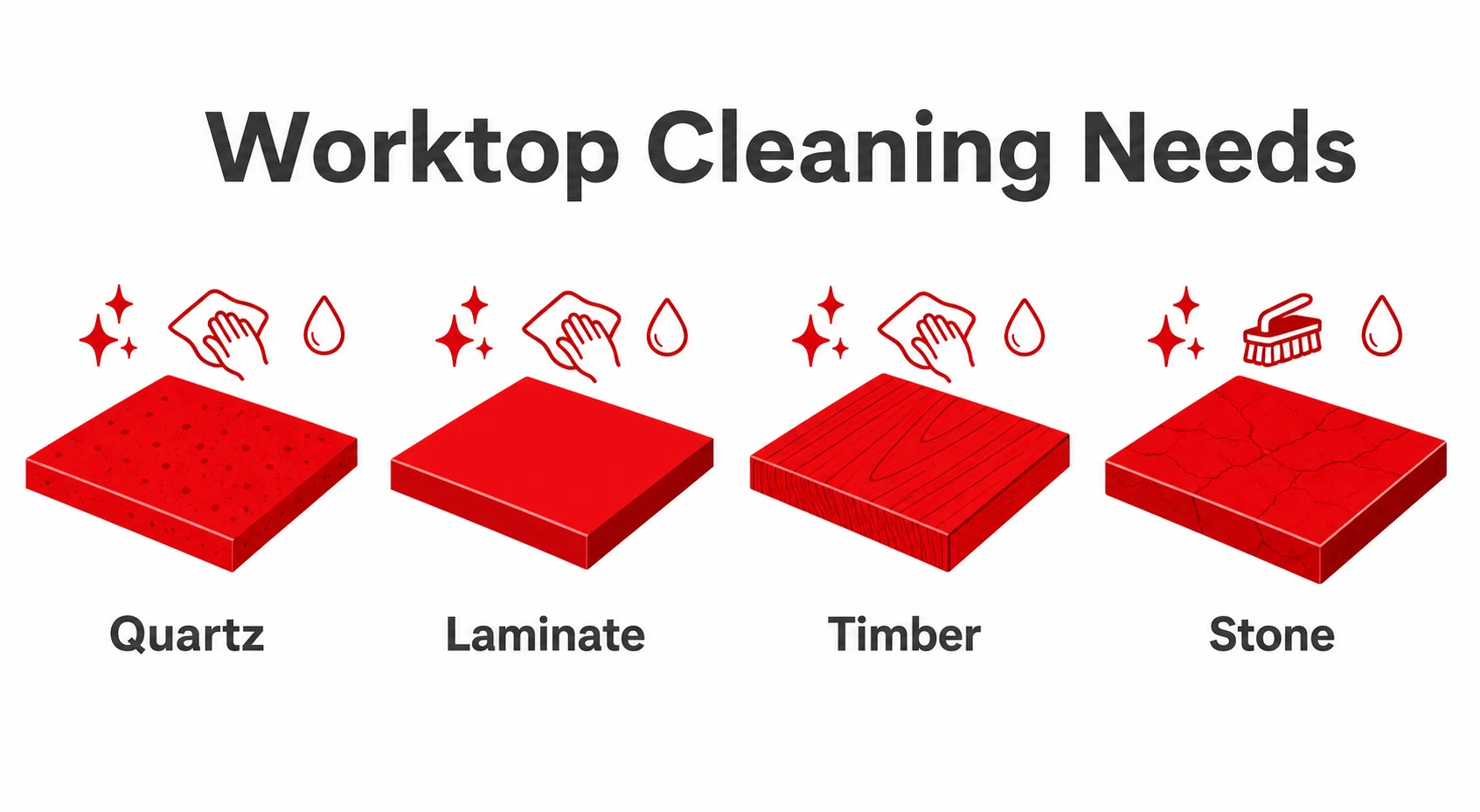
Every worktop material has its own cleaning character. Some surfaces are very forgiving for quick daily wipe downs, while others need a little more care to keep them looking their best. The important point is not that one material is right for everyone, but that the chosen surface should match the household using it.
Laminate worktops are often valued because they are straightforward to clean and available in many styles. For many homes, a damp cloth and suitable mild cleaner will deal with everyday marks. They can work well where the priority is a neat, practical surface with plenty of design flexibility.
Quartz and similar engineered stone surfaces are often chosen for their smooth feel, refined appearance and resistance to many everyday marks. They suit kitchens where a polished finish is important and where the surface needs to stand up to regular food preparation. As with any material, using chopping boards and wiping spills promptly helps protect the finish.
Solid wood has a warmer, more natural character and can bring depth to a kitchen design. It usually needs more mindful care than some other surfaces, especially around water and staining. For the right household, that maintenance can be worthwhile, but it should be understood before the decision is made.
Compact surfaces and other modern options can suit sleek kitchens where slim profiles and practical cleaning are priorities. They can help create a crisp, contemporary feel, especially when paired with handle choices, cabinetry lines and splashbacks that keep the room visually clean.
Before choosing, it helps to ask a few simple questions:
- How often will the kitchen be used for cooking from scratch?
- Will children, guests or multiple people use the worktop each day?
- Are stains from tea, coffee, oils or sauces likely to be common?
- Do you prefer a surface that needs very little attention beyond daily wiping?
- Are you happy with a material that needs more care if it gives the look you want?
Durability is about real use, not just surface strength
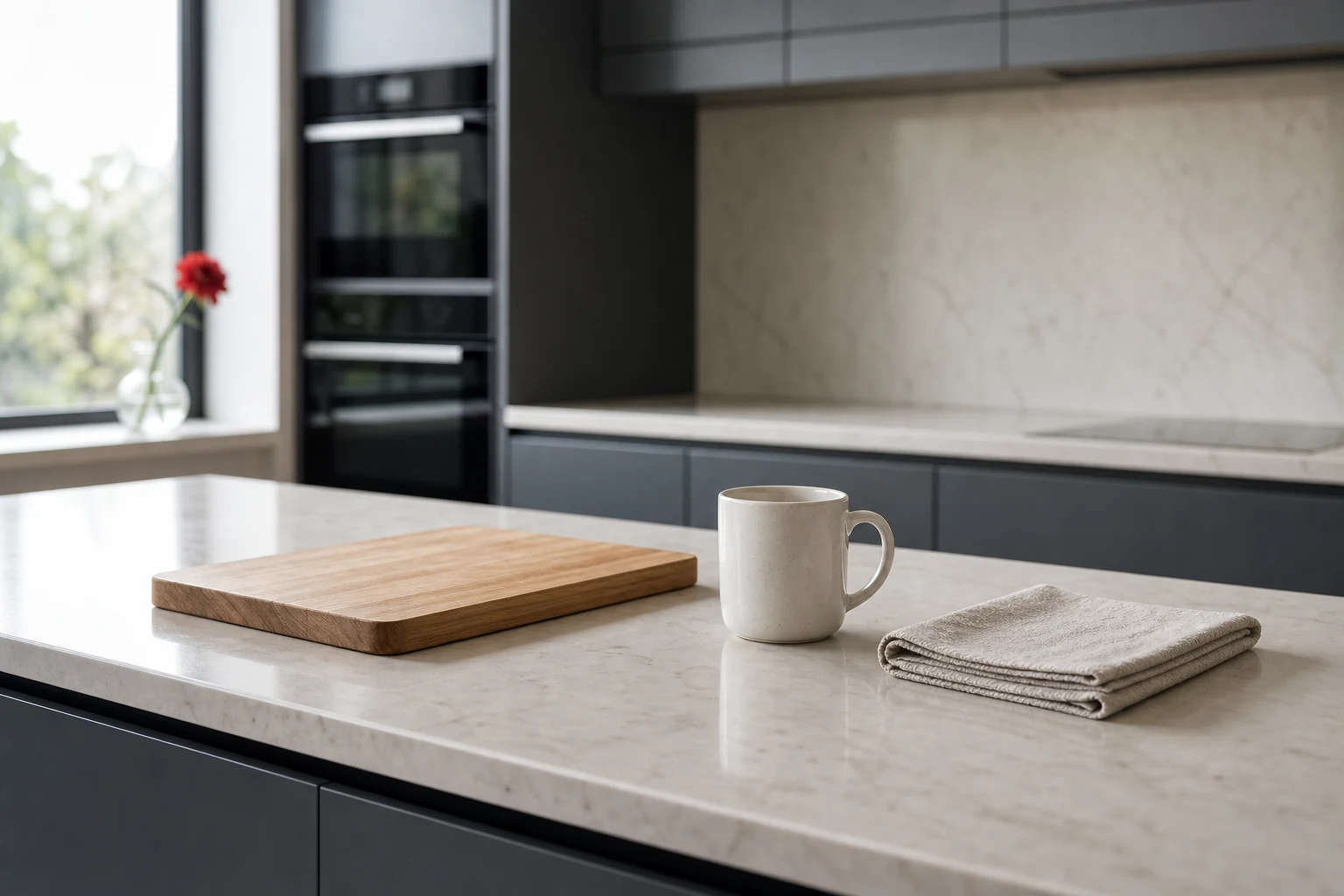
Durability is often discussed as though it only means how hard a surface is, but daily kitchen durability is broader than that. A worktop has to suit heat habits, moisture, impact, staining, edging, joins and cleaning routines. A surface can be strong, yet still be the wrong choice if it does not fit the way the kitchen is used.
For example, the area around the sink needs careful thought because it deals with frequent water contact. The zone beside the hob may need space for hot pans to be moved safely onto suitable protection. Corners, breakfast bars and island edges may take more knocks than quieter parts of the room. A designer will consider these details before recommending the most suitable material and layout.
Durability also depends on how the worktop is installed. Well planned joins, tidy edges, accurate fitting around sinks and hobs, and a sensible relationship between cabinetry and surfaces all contribute to the finished result. Even a premium material can look disappointing if the design and installation are not handled carefully.
Good kitchen design reduces avoidable wear by giving each activity enough room. Prep space near the sink, landing space near cooking zones and a clear section for small appliances can all help the surface work better for longer. This is one reason worktops should be discussed early in the design process, not left until the rest of the kitchen has already been decided.
Food preparation space changes how the kitchen feels
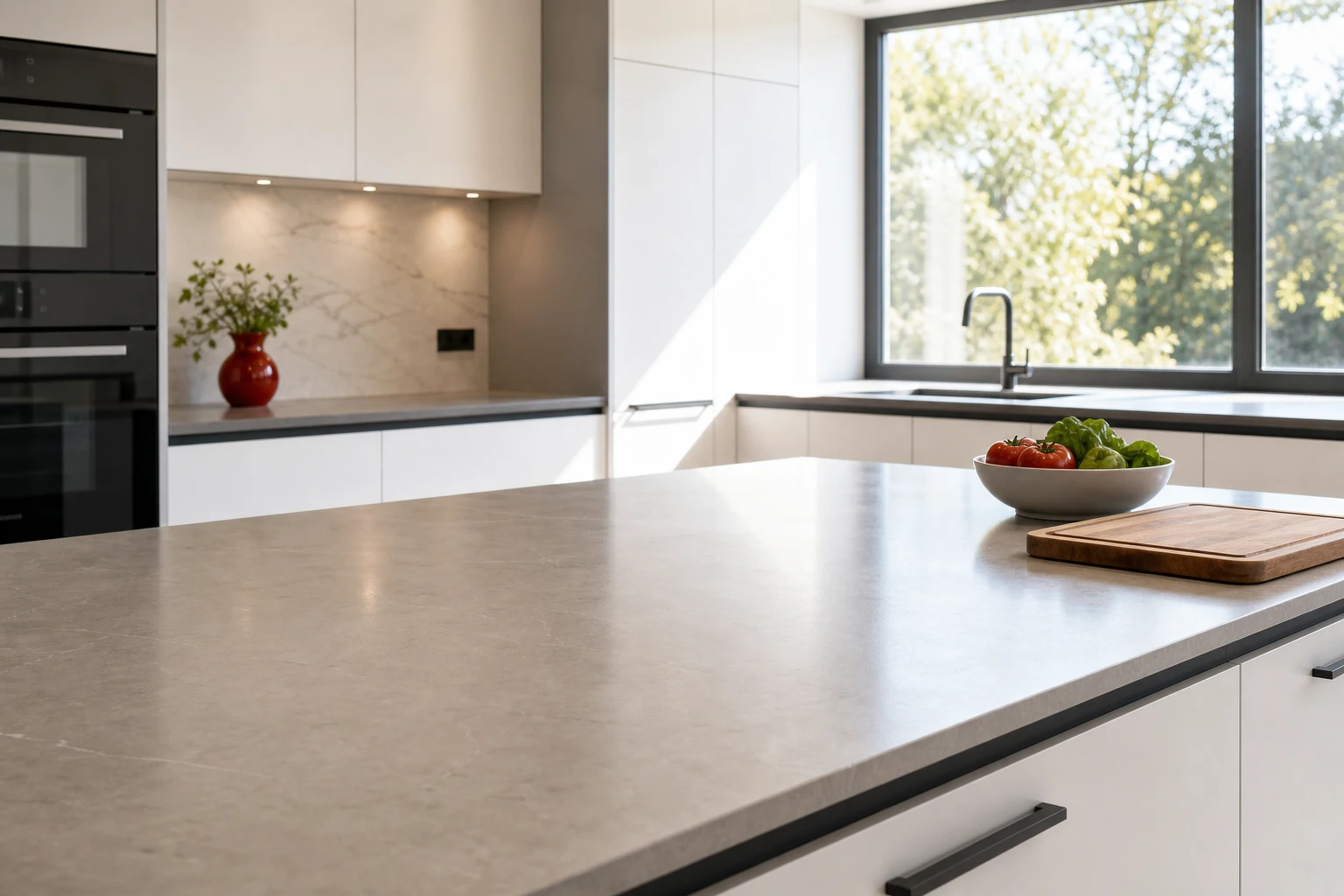
Worktop material matters, but the amount and position of worktop space can be just as important. A kitchen can have an excellent surface and still feel awkward if the main prep area is too small, too far from the sink or constantly interrupted by appliances.
Good prep space should feel natural. You should be able to wash, chop, mix, plate and serve without repeatedly clearing the same small patch. The best layouts often create distinct zones, even in modest kitchens. There may be one clear area for preparation, another for hot drinks or breakfast, and another near the hob for cooking support.
Islands and peninsulas can add useful worktop space when the room allows, but they should earn their place. They need the right clearance around them and should improve movement rather than simply fill the room. In other kitchens, a carefully planned run of cabinetry may provide a cleaner and more efficient solution.
The depth of the worktop, the position of wall units, the choice of sink and the placement of sockets all affect how usable the surface feels. Small details, such as where a kettle or coffee machine will sit, can make the difference between a kitchen that looks good on day one and a kitchen that stays enjoyable in daily use.
If you are comparing styles, visiting a showroom can help you understand scale, surface feel and practical layout more clearly. Redscar Kitchens has also explained how kitchen showroom displays can guide design choices, which is especially useful when worktops, cabinet finishes and storage options need to be judged together.
Matching the worktop to the finished kitchen style
A worktop has a big influence on the visual tone of a kitchen. It can make the design feel clean and minimal, warm and natural, bold and dramatic, or calm and understated. Because it sits across such a large visible area, it affects the whole room even when the cabinetry is the main feature.
Lighter worktops can help a kitchen feel open and crisp, especially when paired with simple cabinet lines. Darker surfaces can add depth and definition, particularly in a design with strong contrast. Stone effect finishes can bring movement and interest, while plainer surfaces can support a quieter, more streamlined look.
The worktop should also sit comfortably with the flooring. If both surfaces compete for attention, the kitchen can feel busy. If they are planned together, the result feels more considered. For anyone weighing up surfaces across the whole room, the guide to kitchen flooring ideas is a useful companion because floors and worktops have to work together visually and practically.
Trends can be helpful too, but only when they support real use. A fashionable finish still needs to suit your cleaning habits, cooking style and storage needs. If you want a kitchen that feels current without dating quickly, it is worth looking at broader kitchen design trends and then filtering them through the way you live day to day.
The most successful kitchens usually balance style with restraint. The worktop looks smart, the cabinetry feels crisp, the storage keeps clutter under control and the installation details help the whole room feel finished.
Questions to ask before choosing a worktop

Choosing a worktop becomes easier when you move from appearance alone to practical questions. The right answers will depend on how often you cook, how much surface space you need, how tidy you like the room to feel and how much maintenance you are comfortable with.
Start by thinking about cleaning. Do you want the simplest possible daily wipe down, or are you happy to care for a surface with a more natural character? Think about stains too. Tea, coffee, red sauces, oils and strongly coloured foods can all influence what feels sensible.
Then consider impact and heat habits. Most households benefit from using chopping boards, trivets and sensible protection regardless of material. A designer can still help you choose a surface that suits your normal routine rather than expecting you to change how you use the room.
Finally, look at the whole kitchen plan. A worktop should support the layout, not just sit on top of it. It should give enough space where you prepare food, look right beside the cabinets and be fitted with care around sinks, hobs and edges. When those details are handled well, the kitchen feels easier to use and easier to keep looking polished.
- Worktops affect daily cleaning, food preparation, durability and the overall feel of a fitted kitchen.
- The best material depends on how the household cooks, cleans and uses the room each day.
- Layout matters as much as material, because prep zones, appliance positions and sink areas all affect usability.
- A professional kitchen design process helps match worktop surfaces with cabinetry, flooring, storage and installation details.
Frequently asked questions
Which kitchen worktop is easiest to clean?
Smooth, non porous style surfaces are often chosen for easy daily cleaning, but the best option depends on the material, finish and how the kitchen is used. Most worktops stay cleaner with prompt wiping, suitable mild products and sensible protection during food preparation.
Should I choose my worktop before or after the cabinets?
It is best to consider worktops and cabinets together. Cabinet colour, door style, handles, flooring, splashbacks and lighting all affect how the worktop will look and how practical the kitchen will feel.
Do darker worktops show more marks?
Some darker finishes can show dust, water marks or crumbs more clearly, while some patterned surfaces are more forgiving. Samples are useful because they show how a surface may behave under normal lighting and daily use.
Can the right worktop make a kitchen easier to use?
Yes. The right worktop material, size and position can make cleaning simpler, create better food prep zones and help the kitchen stay tidy. It works best when chosen as part of the complete kitchen layout.
Plan a worktop that suits real life
If you are planning a new kitchen, Redscar Kitchens can help you compare worktop options as part of a complete fitted design, so the finished room looks polished and works beautifully every day.

One Response